Industrial Design of Smartwatch Cases
I. The Essence of the Watch Case: A ‘Micro Precision Device Carrier’ in Constant Contact with the Human Body
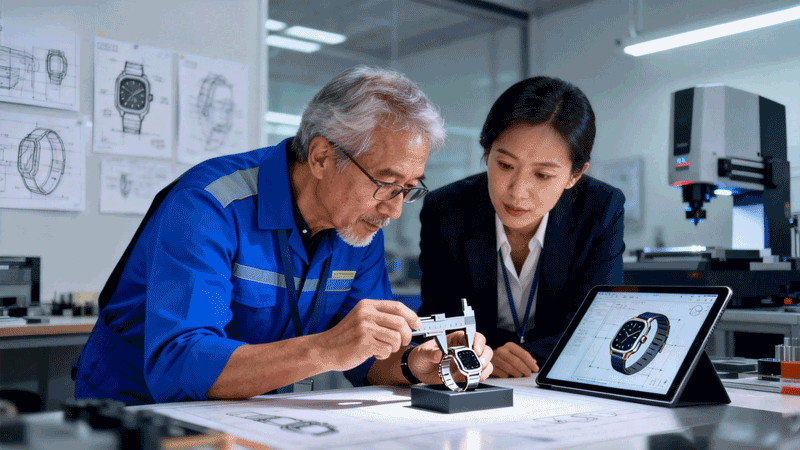
The case of a modern smartwatch is, at its core, a highly integrated functional carrier. It simultaneously shoulders multiple missions: ensuring wearing comfort, supporting intricate structural components (display, sensors, battery, antenna), providing high-reliability protection (waterproofing, sweat resistance, drop protection), and conveying brand identity. Consequently, we consistently approach its design as a micro precision device housing, requiring our team to integrate industrial design, structural engineering, and manufacturing feasibility analysis from the very outset of each project.II. User Experience Design with an Extremely Low Tolerance for Error
Wristwatches are products in constant contact with the human body for 24 hours a day, which dictates the exacting nature of their case design. User experience is of paramount importance; any unreasonable chamfering, thickness, or curvature will be amplified and perceived by the wearer’s wrist. More crucially, those “invisible” aspects of the experience—such as the position of parting lines, the tactile feedback of buttons, antenna performance, and long-term waterproof reliability—will directly undermine brand trust should they prove problematic. A sense of premium quality stems from the product’s condition after 3-5 years of use, not merely at the moment of unboxing. Consequently, our design process consistently prioritises long-term wear simulation and durability testing from the outset.III. Precision Layering: Dissecting the Five Major Structural Systems of a Watch Case
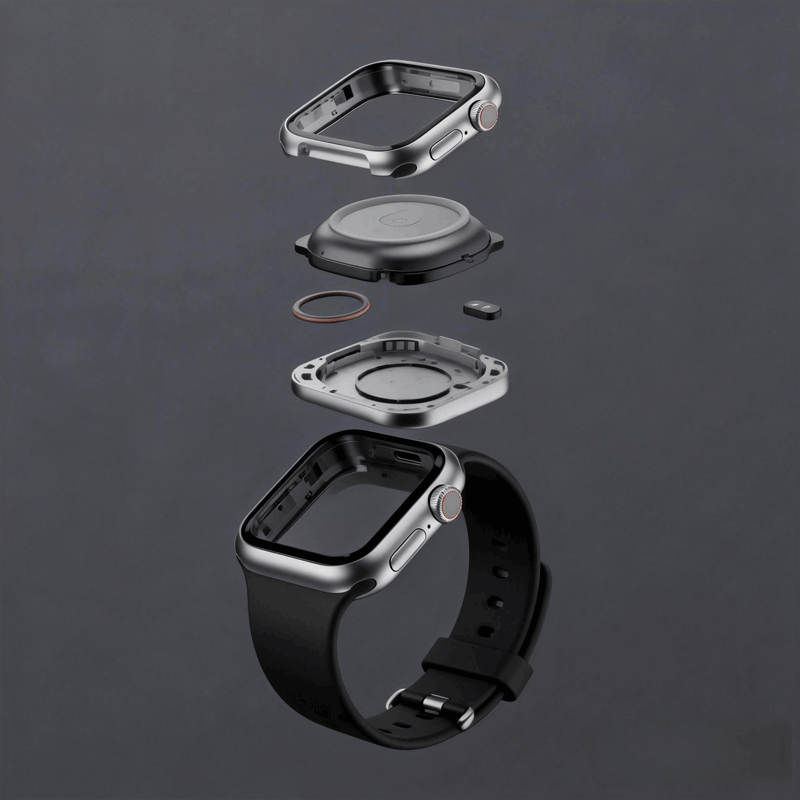
From an engineering perspective, a complete smartwatch case is the intricate integration of at least five subsystems:- Main Case: Serving as the structural framework, it houses all core components. Materials commonly selected include CNC-machined aluminium alloy, stainless steel, titanium alloy, or high-performance composite materials.
- Back Cover: The most underestimated yet critically important “medical-grade interface”, directly impacting skin comfort, sensor signal integrity, and waterproof sealing.
- Screen and Sealing System: An integrated design of screen and housing, with tolerance control achieved at the micrometre level to meet dual standards of waterproofing and visual aesthetics.
- Push-button/Crown System: A compact system integrating mechanical structure, water resistance and ergonomics, where tactile feedback and reliability are paramount.
- Bracelet connection structure: A critical aspect concerning strength, tolerances, and ease of assembly/disassembly. Design shortcomings may result in abnormal noises or even breakage.
IV. Process-Driven Design: Practical Considerations Regarding Materials and Manufacturing Costs
Watch cases represent a quintessential domain of craftsmanship-driven design. Material selection—such as aluminium alloys, stainless steel, titanium alloys, and ceramics—directly defines the product tier, cost, and physical properties. Among these, CNC machining and complex surface treatments (polishing, sandblasting, coating) often constitute the core cost drivers. Extreme tolerance requirements – to meet waterproofing, screen lamination, and button tactility specifications – necessitate the synchronised locking of design, structure, and manufacturing processes during early development stages. Our competitive edge lies in integrating in-house mould design and injection moulding capabilities, enabling us to anticipate and resolve manufacturing challenges during the design phase, thereby mitigating cost escalation risks.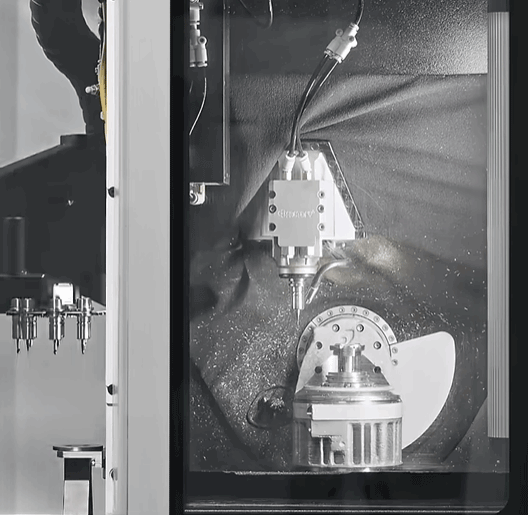
V. Mitigating Risks: Six Critical Warnings in Design Reviews
Based on our extensive experience collaborating with numerous consumer electronics brands, the most common pitfalls in watch case design include: 1) aesthetically pleasing yet uncomfortable to wear; 2) compromising waterproofing reliability for stylistic features; 3) crowns/pushers becoming sources of water ingress failure; 4) insufficient strength in strap attachment structures; 5) shielding effects of metal casings on antenna performance; 6) cost escalation due to complex manufacturing processes. Our engineering team conducts targeted reviews at each design milestone to ensure solutions balance aesthetics, reliability, and commercial viability.VI. Our Design Philosophy: Built for Long-Term Reliability
Our design team adheres to the following principles: commencing development from the “worn state” rather than mere aesthetic renderings; ensuring case components serve the waterproof sealing system from inception; treating the crown and pushers as an integrated “tactile system”; aligning material strategy rigorously with brand positioning; and establishing “product condition after three years” as the design validation benchmark. We believe a successful watch case is the physical embodiment of brand trust and precision engineering – an asset worthy of long-term investment. If you are seeking a partner with a profound understanding of the complexities of smartwatch case industrial design, offering end-to-end engineering solutions from concept to mass production, we invite you to explore our Industrial Design Services capabilities in detail, or directly reach out to our engineering team for tailored advice regarding your project. You may also explore our comprehensive electronics manufacturing solutions supporting products from concept to market, alongside our efficient and transparent project transaction process.
Ready To Start Your Project?
Tell us about your part, material, quantity, or mold requirements. Our team will review your project and provide a practical manufacturing solution.