Automotive Injection Molding for High-Consistency 2K Car Light Components
Automotive Injection Molding for High-Consistency Car Light Components
In modern vehicle development, lighting systems are no longer just functional—they are critical to brand identity, safety performance, and visual differentiation. However, when scaling production, many OEMs and Tier 1 suppliers encounter recurring issues in automotive injection molding, especially for high-volume lighting programs. Common challenges include color variation between batches, dimensional inconsistencies affecting assembly, and unstable surface quality in transparent or decorative components. These issues often stem from multi-part assembly processes and variability in traditional molding methods. At DTG TECH, we address these challenges through advanced double shot injection molding and multi shot injection molding technologies. By integrating multiple materials and functions into a single molding cycle, we significantly reduce tolerance stack-up and ensure consistent quality across millions of parts. Learn more about our plastic injection molding services and how we support automotive-grade production.High-Consistency Two-Shot Molding for Automotive Lighting
Our core solution lies in two-shot (2K) molding, where structural and optical components—such as lamp housings, lenses, and sealing features—are formed in a single cycle. This process is particularly effective for automotive plastic interior parts and exterior lighting assemblies requiring both functional and aesthetic precision.- Integrated Structure: Combine base materials like PA, PC, or BMC with optical-grade PMMA or flexible TPE in one process.
- Eliminated Assembly Errors: No secondary bonding or welding reduces dimensional variation and improves sealing reliability.
- Scalable Production: Multi-cavity molds and automation enable efficient high-volume manufacturing with reduced unit cost.
Precision Structural Design for Stable Performance
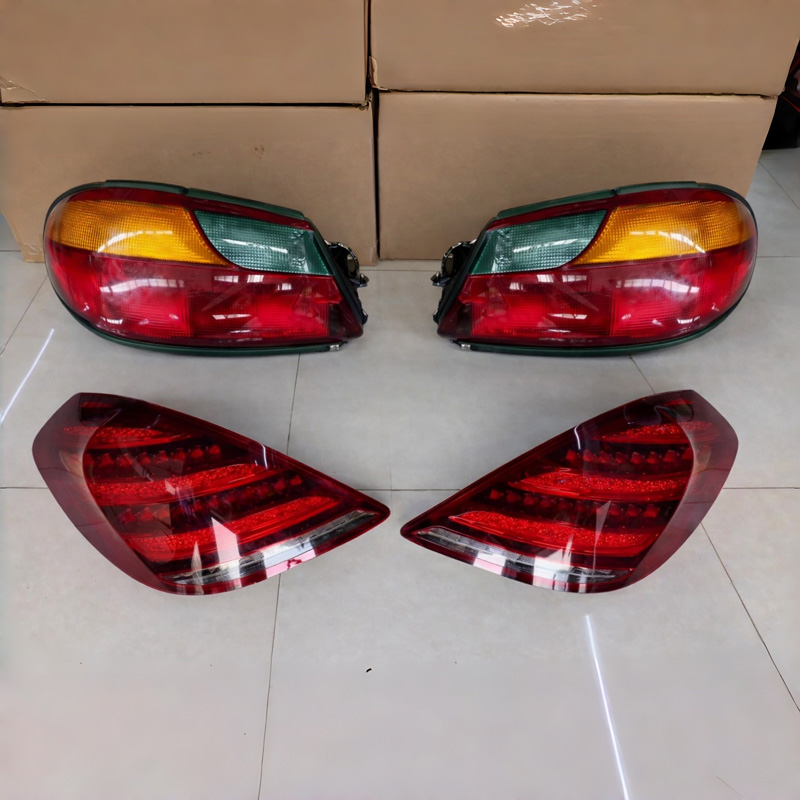
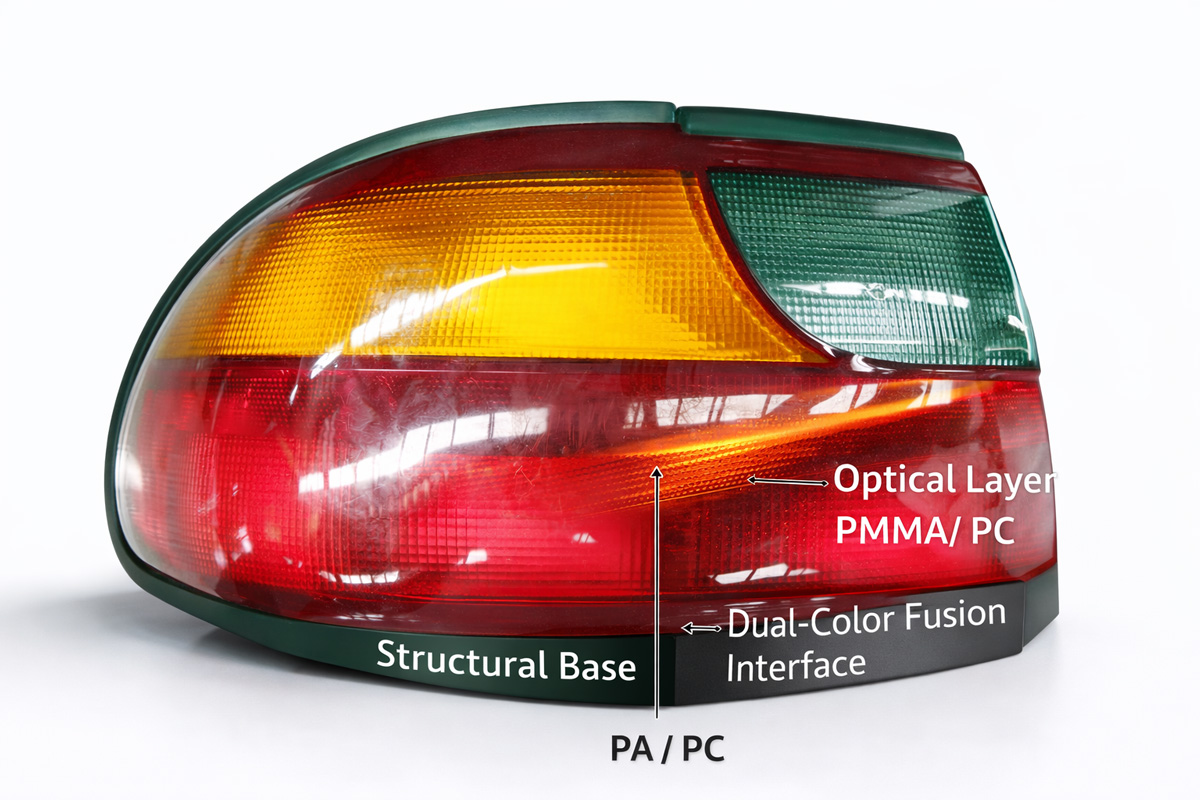
In automotive injection molding, material pairing and structural alignment are critical. Our engineering team optimizes each layer of the component to ensure durability and optical performance.- Structural Layer: PA or PC provides heat resistance and mechanical strength for mounting and long-term use.
- Optical Layer: PMMA or PC ensures high light transmission, UV resistance, and precise light distribution.
- Bonding Interface: Materials are fused at the molecular level under controlled temperature and pressure, ensuring no delamination or defects.
 Compared to traditional assembly methods, 2k automotive
components produced via two-shot molding deliver superior dimensional accuracy, consistent appearance, and reduced process complexity.
Compared to traditional assembly methods, 2k automotive
components produced via two-shot molding deliver superior dimensional accuracy, consistent appearance, and reduced process complexity.
Material Combinations for Automotive Compliance
Material selection is a key factor in ensuring performance and regulatory compliance. Based on our experience in automotive manufacturing, we recommend validated material pairings for different applications:- PA + TPE: Ideal for sealed housings requiring waterproof and dustproof performance.
- PC + TPU: Suitable for impact-resistant structures with scratch-resistant decorative features.
- PMMA + PC/ABS: Used in multi-color lenses for tail lights and signal indicators with clear optical separation.
Process Control for Mass Production Stability
Maintaining consistency from prototype to mass production is a major concern for procurement teams. At DTG, we implement strict process control systems:- Multi-Cavity Tooling: High-precision molds ensure uniform output across all cavities.
- Automated Production: Integration with advanced injection machines minimizes human error.
- Quality Verification: CMM inspection and FAI processes validate dimensional accuracy and repeatability.
Common Production Issues & Engineering Solutions
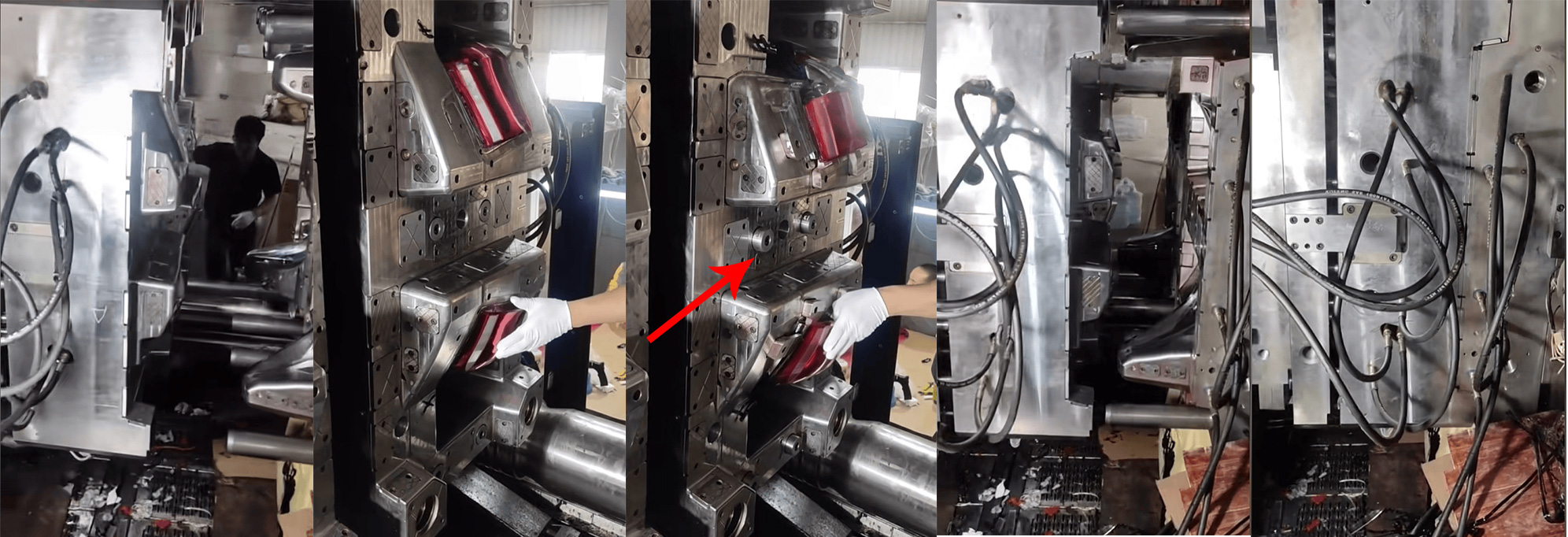
In high-volume automotive injection molding, even minor variations can lead to significant quality issues. We address these challenges with targeted engineering solutions:- Color Variation: Controlled masterbatch sourcing and stable temperature management ensure consistent color output.
- Warping & Tolerance Issues: Optimized cooling systems and mold flow analysis balance material shrinkage.
- Surface Defects: Precision gating and vacuum venting eliminate flow marks and haze in transparent parts.
- Material Delamination: Compatibility testing and interface temperature control ensure strong bonding.
Automotive Standards & Compliance Support
We support global automotive standards to ensure your components meet regulatory and environmental requirements:- UL94 V0 flame resistance for safety-critical components
- RoHS and REACH compliance for environmental regulations
- UV resistance testing to prevent yellowing
- Thermal cycling from -40°C to +85°C for durability validation
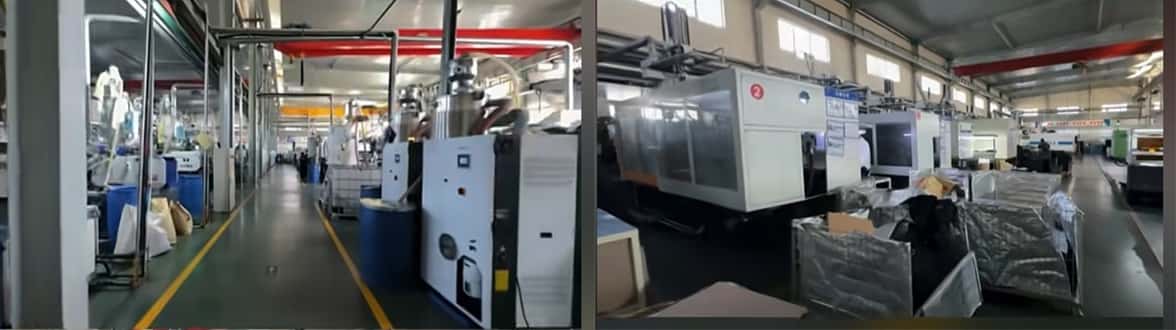
Start Your Automotive Project with Confidence
If you are sourcing reliable partners for automotive injection molding, especially for complex 2k automotive components, DTG TECH offers a proven, scalable solution. From DFM feedback to full production, we ensure your project meets both technical and commercial goals. 👉 Contact our engineering team for a fast quotation and technical consultation.Ready To Start Your Project?
Tell us about your part, material, quantity, or mold requirements. Our team will review your project and provide a practical manufacturing solution.