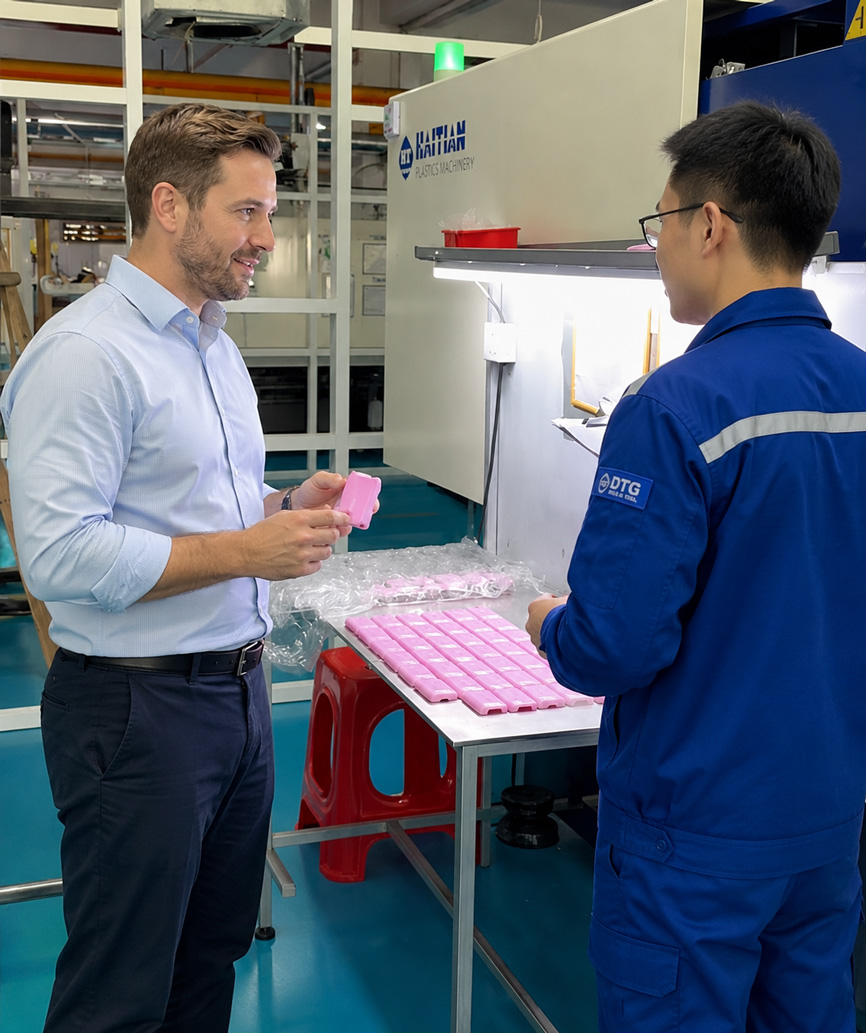
Plastic injection mold for transparent auto lamp housing
Injection Molds for Automotive Light Covers
Optical-grade PMMA injection molding and SPI-A0 mirror mold solution for automotive lighting parts.
Automotive headlamp lenses, taillamp covers, DRL components, and exterior light guides require tight cosmetic, optical, and assembly control. Injection molds for automotive light covers must reduce flow marks, gas marks, silver streaks, weld lines, haze, stress-related distortion, and batch-to-batch gloss variation. This solution combines PMMA material selection, S136 mirror steel, and controlled injection molding for parts with a narrow processing window.
- PMMA material for high transmittance, surface hardness, and optical uniformity.
- S136 mirror-grade stainless steel with SPI-A0 polishing.
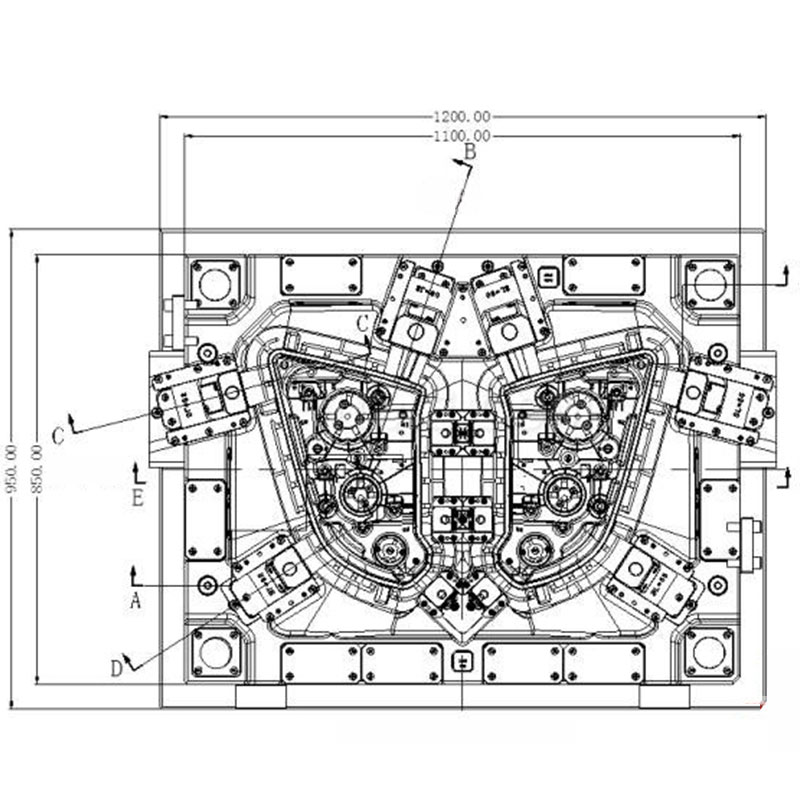
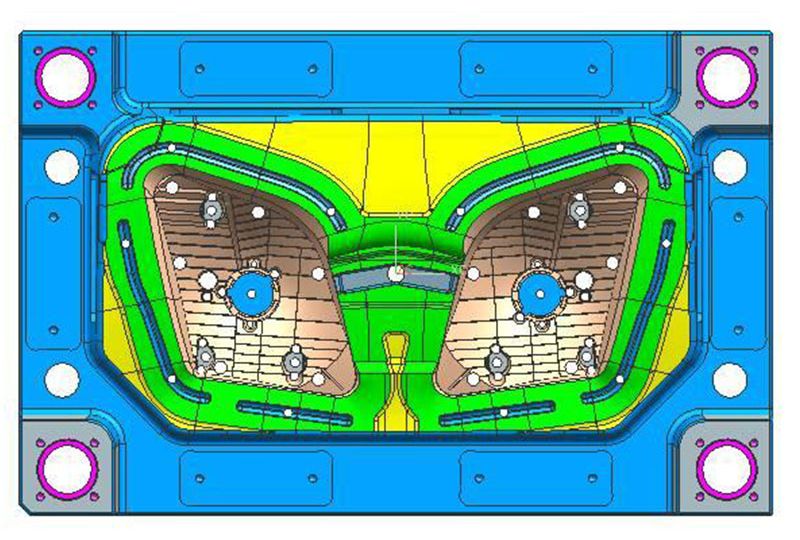
- 1×2 cavity design requiring runner balance and cavity-to-cavity consistency.
- 75-second injection cycle focused on cooling, dimensional stability, and stress release.
- DFM and mold flow review for gate, venting, weld-line, and air-trap risks.
| Item | Specification |
|---|---|
| Material | PMMA / Acrylic |
| Process | Optical-grade precision injection molding |
| Mold Type | 1×2 cavity injection mold |
| Application | Headlamp, taillamp, DRL, and light guide parts |
| Surface Finish | SPI-A0 mirror polish, Ra < 0.01 μm |
| Quality Focus | Cosmetic surface, optical clarity, stress control |
| Customization | Based on project requirements |
| Production Support | DFM, mold flow analysis, mold testing, mass production |
Key Benefits Buyers Care About
Optical Surface Control
SPI-A0 mirror polishing and stable molding conditions help reduce haze, orange peel, flow marks, and gloss variation on visible lens areas.
Dimensional and Assembly Stability
Wall thickness control, cooling uniformity, and stress release support better sealing with the lamp housing and reduce deformation risk.
Mass Production Consistency
Balanced runners, locked process parameters, and mold surface maintenance help manage the narrow processing window of PMMA optical parts.
Application Scenarios for Sedan, SUV, and Truck Light Covers
These molds are used for transparent exterior lighting components where optical behavior, exterior appearance, and dimensional stability must be controlled together.
Materials and Manufacturing Process
PMMA Material Selection
PMMA is selected for high transmittance above 92%, good optical uniformity, and higher surface hardness than PC. For buyers, this means better scratch resistance and clear appearance, while impact resistance must still be reviewed against project requirements.
Core Process Requirements
- Optical-grade precision injection molding
- SPI-A0 mirror polishing with no micro-texture
- Mold flow analysis for flow marks, weld lines, and air traps
- Low-shear filling and stable high packing pressure
- Mold temperature control, typically 80–120°C
Material Comparison
| Requirement | Recommended Material | Engineering Note |
|---|---|---|
| Cost priority | PMMA | Good transparency and lower cost than optical-grade PC. |
| High impact strength | PC | Better toughness, but optical and surface requirements must be reviewed. |
| High-end performance | PMMA + PC composite | May be considered for demanding optical and mechanical needs. |
| Weather resistance | PMMA + UV coating | Improves anti-yellowing and outdoor durability. |
Engineering Solution and Design Considerations
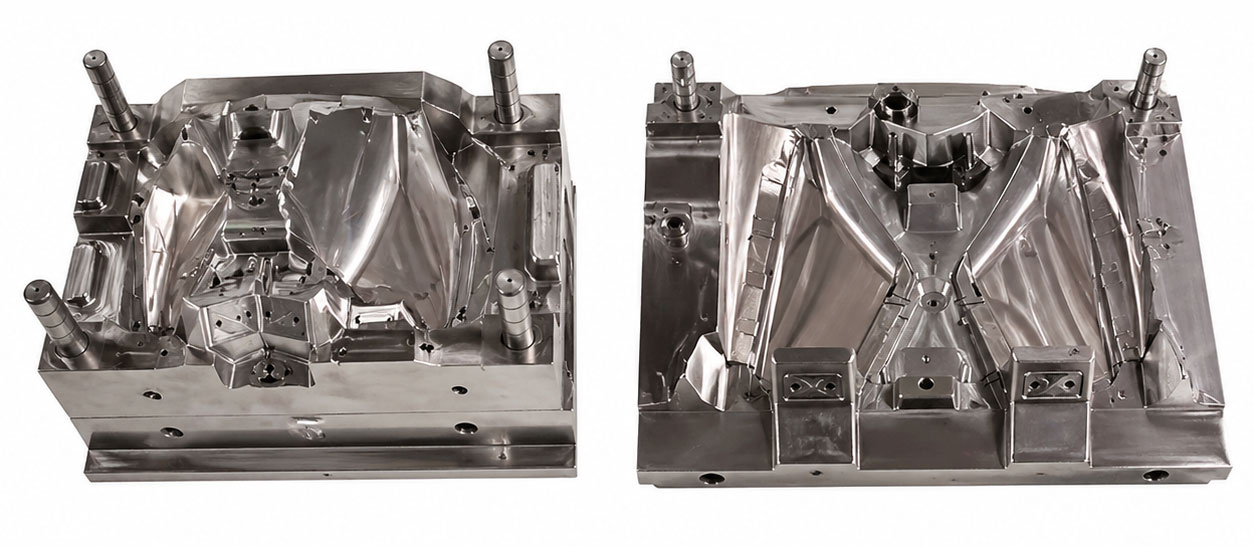
Mold Structure
- Cavity: mirror-finish area critical for optical quality.
- Core: defines internal geometry and influences light refraction.
- Guide pins and bushings: ensure alignment and precision.
- Slides or lifters: used when undercut features are required.
- Gating system: side gate should be placed in a non-optical area.
- Cooling channels: control temperature uniformity and warpage.
| Design Area | Recommended Guideline | Risk if Not Controlled |
|---|---|---|
| Wall thickness | 2.5–4.0 mm | Shrinkage, internal stress, ripple defects, and flow marks. |
| Draft angle | Mirror surfaces ≥1.5°, recommended 2° | Drag marks and surface damage during ejection. |
| Fillet radius | Minimum R ≥ 0.5 mm | Stress concentration and optical distortion. |
| Gate location | Avoid primary optical areas; maintain symmetric flow | Weld lines, flow marks, and visible optical defects. |
| Venting depth | 0.01–0.02 mm | Gas marks, burn marks, and silver streaks. |
Common Production Issues and Solutions
| Issue | Root Cause | Recommended Solution |
|---|---|---|
| Flow marks / waviness | Uneven filling or low mold temperature | Increase mold temperature and optimize gate location. |
| Gas marks / silver streaks | High material moisture or poor venting | Improve PMMA drying and enhance venting design. |
| Surface scratches | Poor demolding or insufficient mold finish | Improve polishing level and increase draft angle. |
| Warpage | Uneven cooling or wall thickness variation | Optimize cooling channels and maintain uniform wall design. |
| Yellowing | Poor weatherability or excessive processing temperature | Control processing temperature and apply UV coating when required. |
Quality Control and Validation
- Automotive Class A surface quality review
- PPAP support for dimensional approval
- Optical testing: transmittance and haze
- Thermal cycling validation: -40°C to 85°C
- UV aging and anti-yellowing evaluation
- Sealing performance review for assembled lamps: IP67 / IP68
- Chemical resistance for car wash chemicals, rainwater, and salt spray
- Regulatory compliance review: RoHS / REACH
Engineering Support from Automotive Light Cover Mold Manufacturers in China
DTG TECH CO., LTD. supports custom mold making, injection molding, mold design, DFM review, prototyping, mold testing, mass production, and quality control for transparent automotive lighting components.
From an engineering perspective, the key work is not only machining the mold. It is also the balance of material behavior, optical requirements, gate strategy, cooling layout, polishing capability, and stable process control.
FAQ
Why is PMMA commonly used for automotive light covers?
PMMA provides high transparency, good optical uniformity, and better surface hardness than PC. It is suitable when clarity and scratch resistance are more important than high impact strength.
Is a side gate suitable for optical lighting parts?
A side gate has a simple structure and lower manufacturing cost, but it can increase flow mark and weld line risk. It should be placed in non-optical areas when used for optical parts.
Can the same engineering logic apply to injection molds for commercial vehicle light covers?
Yes. The same principles apply to sedan, SUV, truck, van, pickup, and commercial vehicle light covers, although wall thickness, lens geometry, assembly sealing, and production volume should be reviewed separately.
What should buyers check before selecting automotive light cover mold manufacturers in China?
Buyers should review DFM capability, mold flow analysis, SPI-A0 polishing capability, PMMA processing control, mold maintenance standards, and mass production consistency.
What are the main risks during mass production?
The main risks are mold surface degradation, injection temperature fluctuation, inconsistent material drying, uneven venting, unstable filling, and internal stress buildup.
Related Engineering Resources
Your Professional Industrial Mold Manufacturer Partner
We provide high-quality, manufacturer plastic injection mold server, covering injection molding, die-casting, stamping and other industries, and are committed to …
Automotive Injection Molding for High-Consistency 2K Car Light Components
Automotive injection molding solutions for 2K car light components. Ensure consistent quality, stable delivery, and cost efficiency for high-volume production.
How to Design Injection Molds for Automotive Light Covers | DTG
Automotive lighting components are often described as the “eyes” of a vehicle. For engineering and purchasing teams, injection molds for automotive…
Design Essentials for Automotive Headlamp Reflector Injection Molds | DTG
Automotive headlamp reflectors (also called reflector mirrors) are critical safety and decorative components. They prevent direct glare, direct light …
Engineering Summary for Injection Molds for Automotive Light Covers
This product type is challenging because optical-grade appearance, internal stress control, and production consistency must be managed together. The core work includes PMMA material control, mirror mold quality, gate location, cooling balance, venting design, and polishing retention during production.
For buyers evaluating Injection molds for automotive light covers, the main decision points should include design feasibility, material selection, mold structure, process control, cost control, and stable delivery. These factors are especially important for SPI-A0 surfaces and transparent optical parts with a narrow molding window.
As one of the automotive light cover mold manufacturers in China, DTG TECH CO., LTD. can support DFM review, custom mold making, injection molding, mold testing, and mass production preparation for projects such as injection molds for pickup truck light covers and other automotive lighting applications.
Ready To Start Your Project?
Tell us about your part, material, quantity, or mold requirements. Our team will review your project and provide a practical manufacturing solution.