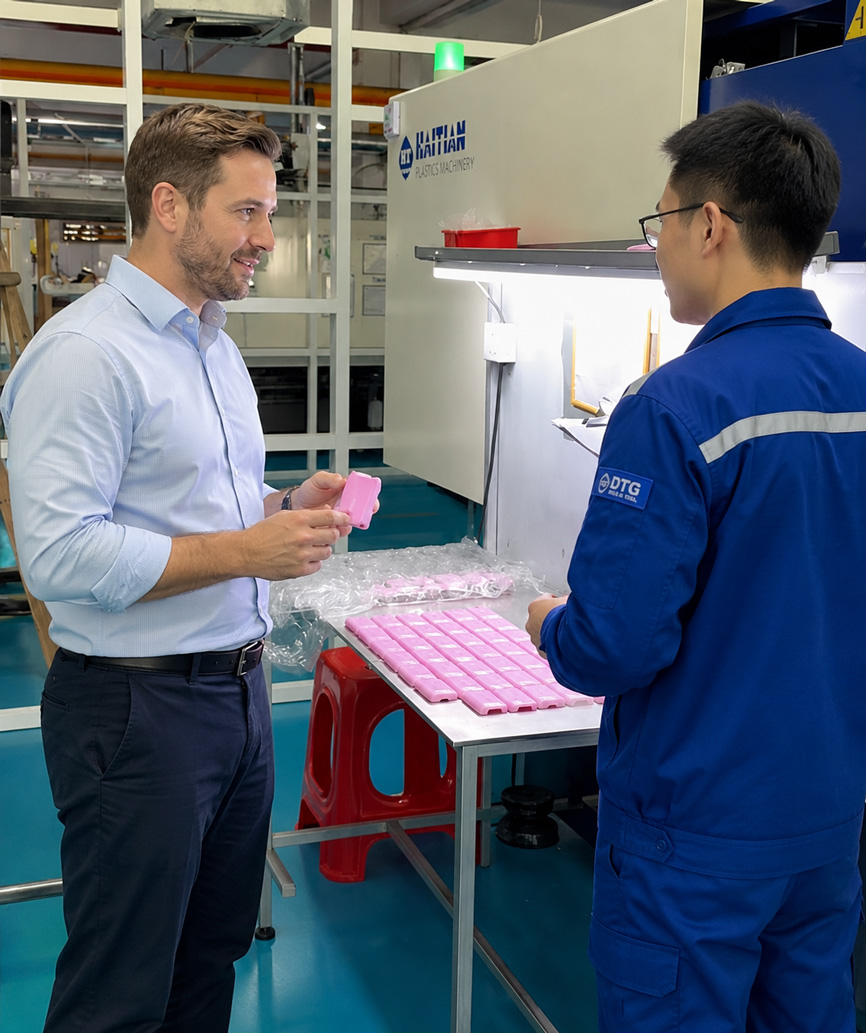
Plastic Chair Injection Mold
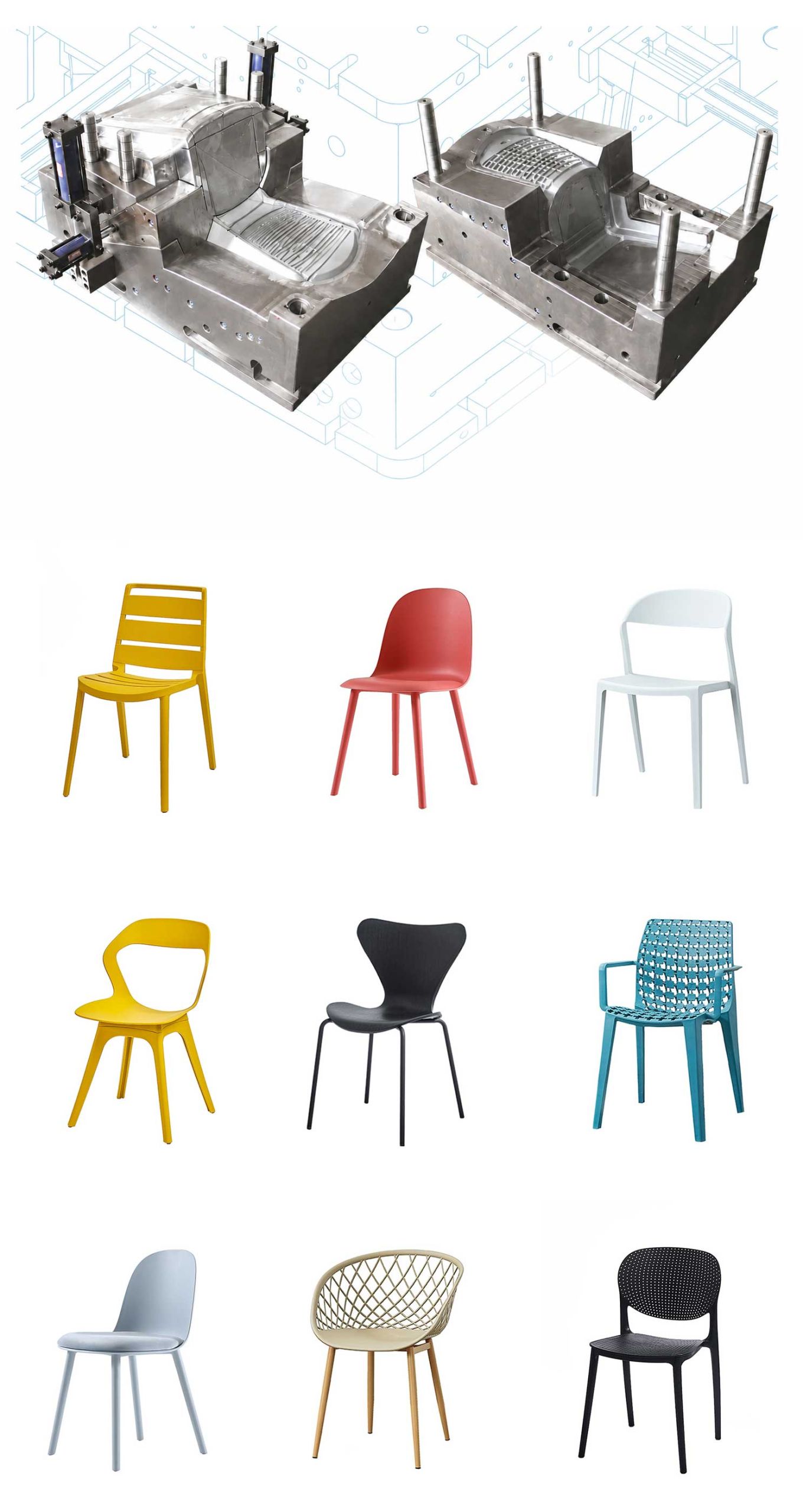
Plastic Chair Injection Mold
OEM plastic chair mold manufacturing for one-piece dining chairs, stackable chairs, outdoor chairs, and large seating products.
Furniture manufacturers, OEM brands, and engineering procurement teams often need a plastic chair injection mold that balances ergonomics, appearance, controlled wall thickness, weight reduction, and long mold life. DTG TECH supports plastic chair mold projects with large-part mold experience, mold flow analysis, one-piece chair mold design, and batch injection molding support.
- Large injection molding machines from 600 to 1300 tons for chair molds with large projected areas.
- Maximum single-shot weight up to 6000 g for thick-wall outdoor chairs and structural parts.
- One-piece chair molds with no assembly seam and improved structural integrity.
- Internal parting structure design for higher strength and smaller parting lines.
- CAD / CAE / CAM support for DFM, gate location, draft angle, and demolding feasibility.
| Item | Specification |
|---|---|
| Material | PP, filled PP, PC/ABS, or specified resin |
| Process | Large-part injection molding, optional gas-assisted molding |
| Mold Type | Large plastic chair mold / one-piece chair mold |
| Application | Dining chairs, stackable chairs, outdoor chairs, patio chairs |
| Surface Finish | Polishing, etching, leather texture, wood grain, anti-slip texture |
| Quality Focus | Warpage control, sink mark reduction, load-bearing strength, mold life |
| Customization | Based on chair design, annual volume, resin, and mold standard |
| Production Support | DFM, mold flow analysis, mold trial, FAI, CMM report |
OEM Plastic Chair Mold Manufacturing
Large-Part Mold Experience
DTG TECH supports large plastic chair mold projects for parts with large projected areas, deep ribs, long flow paths, and strict dimensional requirements.
One-Piece Chair Mold Design
One-piece chair molds help remove assembly seams, improve structural integrity, and support cleaner appearance for OEM furniture brands.
Engineering Support from Early Design
CAD / CAE / CAM analysis is used to review parting line, draft angle, gate location, wall thickness, and demolding feasibility before tooling starts.
Common Challenges in Plastic Chair Mold Production
Large seating products are sensitive to flow balance, cooling, stiffness, and demolding. These issues directly affect OEM brand reputation, rework cost, and customer complaint rates.
| Challenge | Typical Issue | Engineering Impact |
|---|---|---|
| Warpage | Uneven cooling or large wall thickness variation | Seat and backrest flatness issues may affect stacking or assembly inspection. |
| Sink marks | Thick rib roots or screw boss areas | Visible depressions affect appearance and hand feel. |
| Insufficient load-bearing strength | Low stiffness in backrest or seat panel | May cause cracks or permanent deformation after use. |
| Uneven wall thickness | Unbalanced flow between thin and thick areas | Filling difficulty, shrinkage, voids, or inconsistent strength. |
| Short mold life | Ordinary steel, welding repairs, or poor cooling design | Flash or cavity damage may appear within 300,000 shots. |
| Demolding difficulty | Improper ejection or insufficient draft | Ejector whitening, drag marks, or surface damage. |
Our Plastic Chair Mold Solutions
Rib Optimization and Wall Thickness Control
Mold flow analysis is used to calculate main wall thickness, typically 3–4 mm. The rib-to-wall thickness ratio is normally controlled at ≤0.6 times the main wall thickness. Radiused transitions around the seat, chair legs, and rib roots help reduce stress concentration and sink mark risk.
Cooling System Optimization
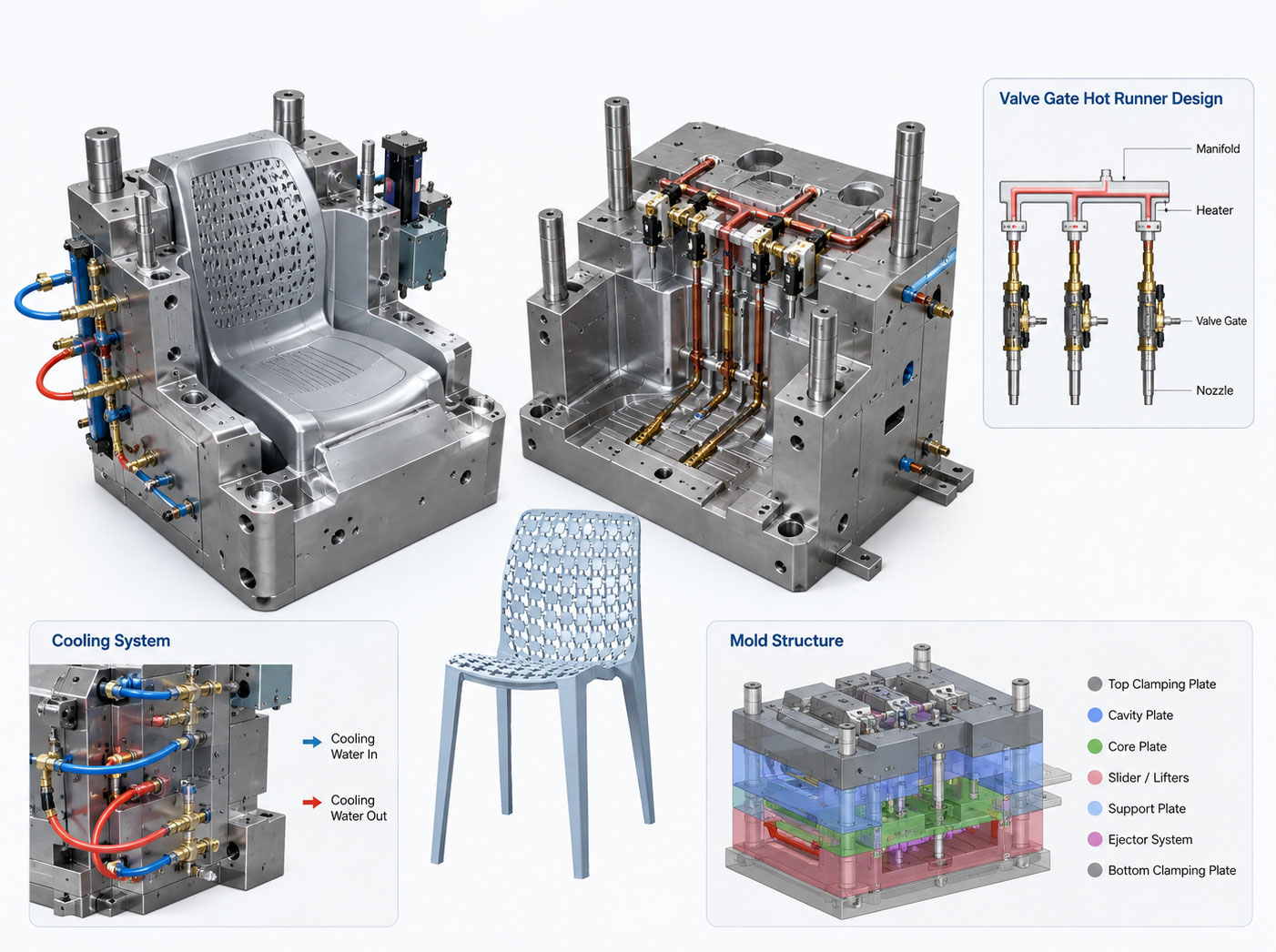
For complex chair mold geometry, 3D-printed conformal cooling can be used in core areas, or optimized baffle-type channels can be applied. Mold surface temperature difference can be controlled within ±2°C, and the molding cycle may be reduced by 15%–25% while helping control warpage.
Flow Balance Design
Gate location, valve-gate hot runner design, vent depth, and local wall thickness compensation are adjusted to move weld lines to non-cosmetic or low-stress areas. Auxiliary vent inserts around the backrest reduce air traps and burn marks.
| Mold Area | Material / Treatment | Purpose |
|---|---|---|
| Cavity / core | 2738 pre-hardened steel around HRC33, or 2344 / 2316 hardened steel around HRC48–52 | Supports long mold life and reduces parting line burr risk. |
| Wear components | SKD11 or powder metallurgy steel | Used for slides and lifters requiring wear resistance. |
| Corrosion / abrasion protection | Hard chrome plating, hardness ≥HRC60 | Used when recycled material or glass-fiber-filled material is specified. |
Gas-Assisted Molding
For thick-wall outdoor chairs or hollow chair legs, gas-assisted molding can reduce weight by 15%–20%, maintain rigidity, and reduce internal voids.
Stackable Chair Structure Design
For stackable chair mold manufacturer projects, stacking foot pad slots, stacking clearance, and anti-jamming features are pre-controlled through mold and CAE review.
Plastic Chair Mold Manufacturing Capabilities
DTG TECH’s mold workshop supports high-precision machining, finishing, mold testing, and inspection for export-standard chair molds. These capabilities are important when selecting a chair mold manufacturer for large molded seating products.
| Process | Equipment / Capability | Key Indicators |
|---|---|---|
| CNC machining | Large gantry 5-axis / 3-axis high-speed milling | Travel ≥2 m, accuracy ±0.01 mm, rough and finish machining separated. |
| EDM | Mirror EDM | Used for deep ribs, narrow slots, and complex texture areas; Ra ≤0.8 μm. |
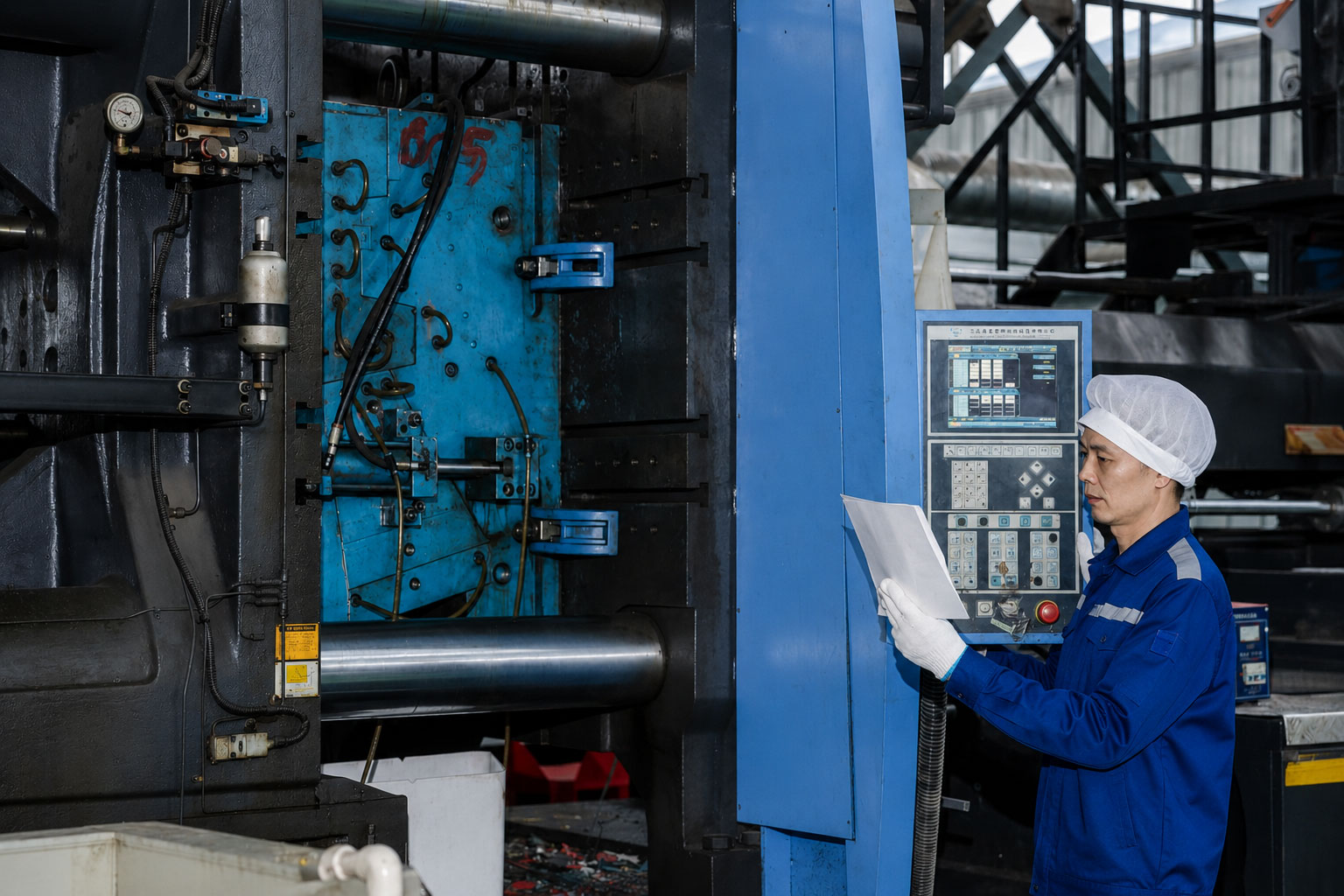
| High-tonnage mold trial | 800T / 1300T injection molding machines | Temperature controllers and robots simulate production conditions. |
| Mold polishing | Five-level polishing standard | From rough polishing to #12000 diamond paste for cosmetic seat surfaces. |
| Texture finishing | Etching, leather texture, wood grain | Customized anti-slip or decorative chair surface textures. |
| Mold testing | CMM report and first article inspection | Motion tests for ejector pins, slides, and hot runner valve pins. |
Without heat treatment: 25–28 days to first trial.
With heat treatment and complex slides: 35–40 days to first trial.
One cavity per mold: T0 samples within 45 days.
Applications of Plastic Chair Molds
Stackable Chairs
For schools, auditoriums, meeting rooms, and training centers; focused on lightweight structure and stacking stability.
Outdoor Chairs
For garden chairs, patio chairs, and park seating; requiring UV resistance, weather resistance, and anti-slip surfaces.
Dining Chairs
For home and restaurant use; focused on surface finish, ergonomics, and easy cleaning.
Commercial Seating
For cafés, hotels, and waiting areas; requiring appearance, strength, and easy replacement.
Patio Chairs
For one-piece lounge chairs and rocking chairs; often using thick-wall structures or gas-assisted molding.
Why Choose DTG TECH
- Engineering support: DFM review and mold flow analysis before tooling; optimization recommendations after mold trial.
- Verifiable tooling reliability: 500 continuous molding cycles before shipment, with CMM reports, FAI reports, and EDM electrode allowance records.
- Export mold standards: HASCO, DME, and MISUMI components available when specified; nameplates, anti-rust packaging, and water circuit markings included.
- Mold life commitment: 2738 steel with non-glass-fiber PP supports ≥800,000 shots without major repair.
- High-life option: 2316 hardened steel with glass-fiber-filled material supports ≥1,000,000 shots without flash at the parting line.
Project Response and Export Support
DTG TECH has supplied stackable chair molds and large outdoor chair molds for furniture brands and OEM suppliers serving Europe and North America, with selected long-term cooperation projects exceeding 10 years.
Initial inquiry response is provided within 1 hour, with preliminary quotation and lead time evaluation within 24 hours. During the project, weekly progress reports with photos or videos are provided.
FAQ for Chair Mold Procurement
What information is needed to quote a plastic chair mold?
Please provide 3D chair design files or reference images with overall dimensions, target annual production volume, total mold life requirement, resin type, UV or recycled material requirements, delivery location, and required mold standard.
When should gas-assisted molding be considered?
Gas-assisted molding is useful for thick-wall outdoor chairs or hollow chair leg structures where weight reduction, internal void control, and rigidity are important.
How does DTG TECH reduce warpage in large chair molds?
Warpage is reviewed through mold flow analysis, cooling layout optimization, wall thickness control, gate balancing, and local structure adjustment before and after mold trial.
What should buyers check when choosing a chair mold supplier?
Buyers should check large-part mold experience, high-tonnage trial capability, mold steel selection, cooling design, polishing and texture capability, export standards, and inspection documentation.
Can DTG TECH support both trial production and mass production?
Yes. DTG TECH supports mold design, DFM, mold flow analysis, mold testing, prototyping, injection molding, and preparation for reliable production.
Related Product Showcase
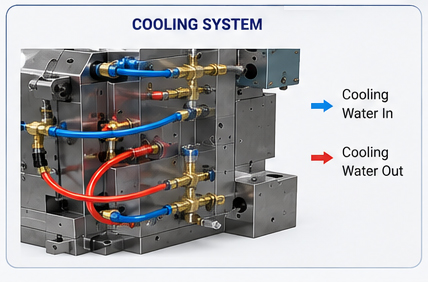
How Plastic Chair Injection Molds Reduce Production Costs?
Learn how plastic chair molds reduce production costs through DFM, cooling optimization, multi-cavity design, waste control, and mold life planning.
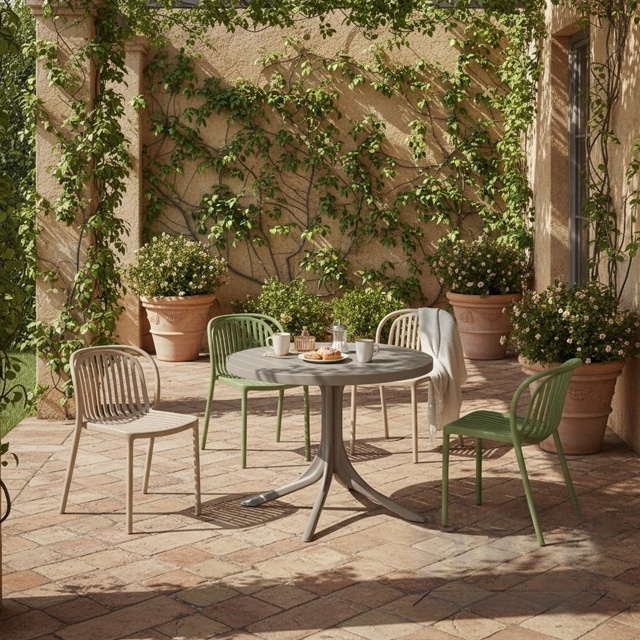
Outdoor Plastic Chairs
Outdoor plastic chairs with quality assurance, stable delivery, cost control, reliable production, and engineering support.
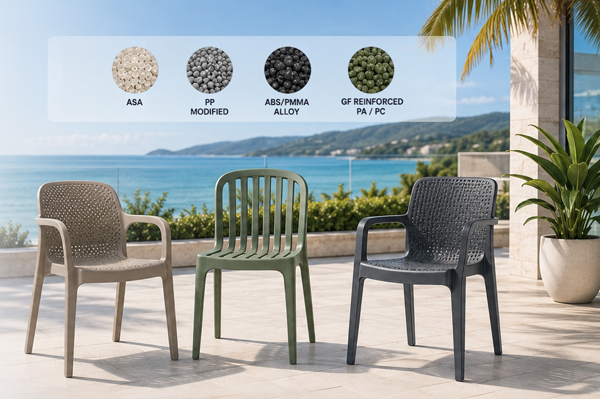
Best Outdoor Plastic Chair Materials For OEM Projects
Compare outdoor plastic chair materials including PP, HDPE, ASA, and modified plastics for UV resistant plastic chairs and OEM projects.
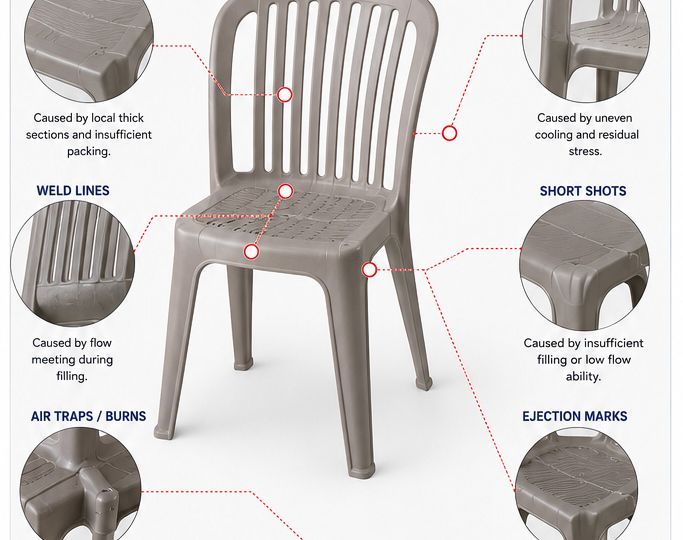
Common Problems in Plastic Chair Injection Molding
Learn common plastic chair injection molding problems, including chair molding defects, plastic chair warpage, sink marks, and mold flow issues.
Engineering Summary for Plastic Chair Injection Mold Projects
A plastic chair injection mold is a large-part tooling project where appearance, structural strength, wall thickness, cooling balance, demolding, and long mold life must be engineered together. For one-piece chairs and outdoor seating, mold structure and process control directly affect flatness, load-bearing performance, cycle time, and repeatability.
For procurement teams evaluating a plastic chair mold, the key decision points include design feasibility, material selection, mold structure, hot runner and gate strategy, cooling layout, texture finishing, process control, cost control, and stable delivery. Large projected areas and thick-wall regions should be reviewed early through DFM and mold flow analysis.
As a chair mold manufacturer and chair mold supplier, DTG TECH supports OEM projects from design review to mold testing and batch injection molding. For a stackable chair mold manufacturer project or an outdoor plastic chair mold, please send 3D files, resin requirements, annual volume, mold life target, and export standard for engineering review.
Ready To Start Your Project?
Tell us about your part, material, quantity, or mold requirements. Our team will review your project and provide a practical manufacturing solution.