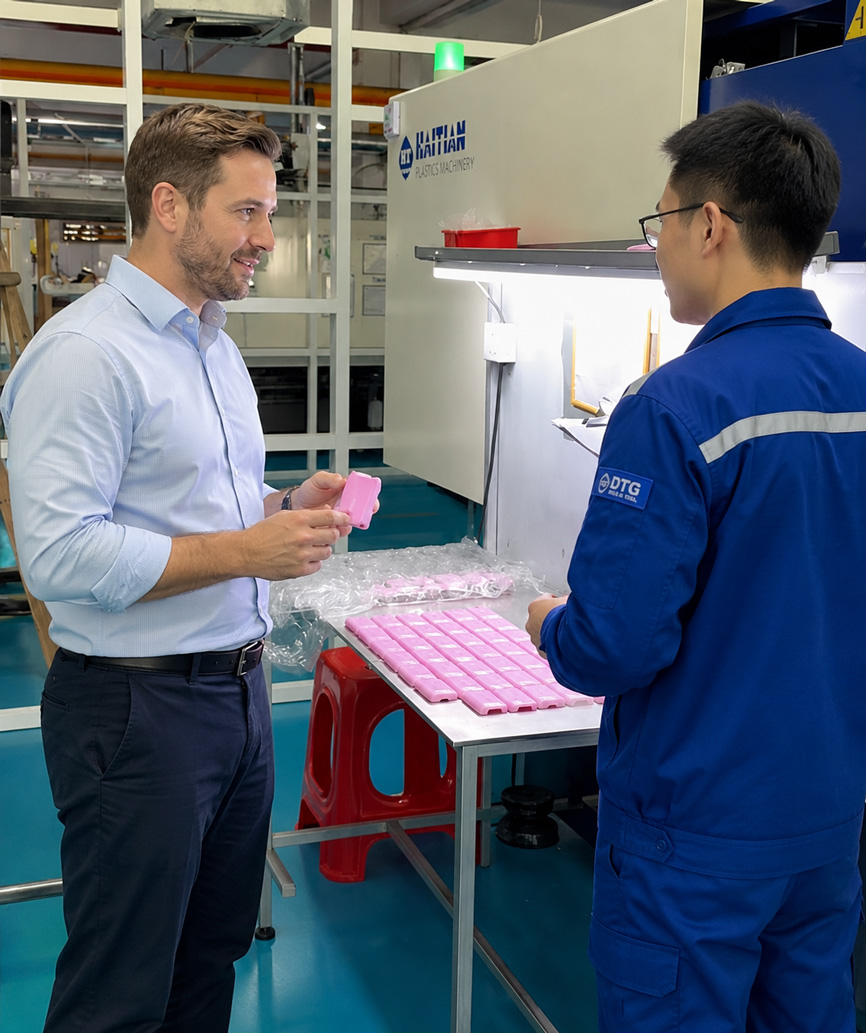
OEM Custom Sensor Housing – PA66 Plastic Injection Molding
PA66 Plastic Custom Sensor Housing: High Performance and Reliability for Industrial Applications
In today’s B2B industrial manufacturing sector, sensor housings are not just cosmetic parts, but crucial components where functionality is paramount. Our PA66 plastic injection-molded sensor housings are designed with advanced custom specifications to meet the high-performance needs of industrial automation, automotive electronics, fluid detection, and mechanical equipment position sensing applications.
Product Definition and Core Functionality
- Industrial Automation Sensors
- Automotive Electronics Sensors
- Fluid Detection Sensors
- Mechanical Equipment Position Detection Modules
The core function of the PA66 injection-molded sensor housing goes beyond appearance, serving essential structural roles:
- Structural Support: Ensures physical stability and strength of the housing.
- Electrical Insulation: Protects internal electronic components, ensuring safety and functionality.
- Environmental Protection: Provides water resistance, dust resistance, and corrosion protection.
- Installation Alignment: Ensures sensors can be precisely mounted within equipment, compatible with existing installation structures.
Design and Functional Analysis
- Brass Insert: Using insert injection molding technology, it improves wear resistance, ensuring stable torque locking, efficient electrical grounding, and signal extraction.
- Two-Piece Structure: Facilitates assembly with internal PCB direct mounting, supports ultrasonic welding or screw attachment to meet different sealing needs.
- Standard Installation Tabs: Complies with B2B industrial design standards, ensuring compatibility with existing equipment structures for easy replacement and adaptation.
Material Selection: Advantages of PA66
- Mechanical Properties: Shock-resistant and highly rigid, suitable for high-strength environments.
- Temperature Resistance: Can withstand temperatures up to 120°C for long periods and 150°C in the short term.
- Electrical Performance: Excellent electrical insulation properties with high volume resistivity and safe creepage distances.
- Customizable Modifications: Options for glass fiber reinforcement (GF30), flame-retardant grades, UV resistance, and hydrolysis resistance to meet various application needs.
Customization and Application Scenarios
Depending on the application environment, we recommend the following PA66 material modifications:
- Industrial Automation: PA66 + GF30
- Automotive Cabin: PA66 GF + Hydrolysis Resistance
- Outdoor Use: PA66 + UV Stabilizer
- High Fire Resistance: PA66 UL94 V0
- High Impact Environments: PA66 + Impact Modified
Certifications and Testing Support
- Material Certifications: UL 94 flame retardant level, RoHS, REACH, etc.
- Product Certifications: CE, UL certification, IP protection levels (IP65/IP67), automotive industry IATF16949, ISO 9001, ISO 14001, etc.
- Testing Requirements: High-low temperature cycling, salt spray testing, drop testing, torque testing, plug/unplug life testing, aging tests, etc.
From Design to Mass Production Process
- Design Stage: 3D modeling, DFMEA analysis, mold flow analysis, and wall thickness design to ensure product quality.
- Mold Development Stage: Design of insert positioning jigs, runner and venting systems to ensure mold stability.
- Mold Testing Stage: T0-T2 testing stages to validate material and design feasibility, ensuring no warping, bubbles, or shrinkage issues.
- Small Batch Verification: Structural strength validation, waterproof testing, environmental testing, etc.
- Mass Production Stage: Full-scale production with injection molding, insert assembly, ultrasonic welding or screw attachment, IP testing, etc.
Common Pain Points in Mass Production and Solutions
- Insert Misalignment: Solved through insert positioning design and automated insert placement.
- PA66 Water Absorption Deformation: Solved through pre-drying materials, controlling storage humidity, and post-production baking treatment to ensure dimensional stability.
- Glass Fiber Reinforcement Causes Flash: Solved by optimizing mold venting and adjusting injection pressure.
- Unstable IP Ratings: Enhanced by designing stop structure and controlling welding energy.
- Cost Fluctuations: Mitigated through long-term material agreements and supplier diversification.
Conclusion: High Reliability and Stability
The PA66 plastic custom sensor housing, with its excellent mechanical strength, temperature resistance, electrical insulation, and customizability, is widely used in high-demand fields such as industrial automation and automotive electronics. Whether enhancing sensor stability or reducing equipment maintenance costs, this housing provides long-lasting, reliable protection for your products.
We not only offer high-performance products but also tailored solutions to meet your specific needs. If you have any particular requirements, feel free to contact us for more professional support.
For more details, visit our Plastic Injection Molding page and explore our Industrial Molds section.
Ready To Start Your Project?
Tell us about your part, material, quantity, or mold requirements. Our team will review your project and provide a practical manufacturing solution.