Introduction ABS (Acrylonitrile Butadiene Styrene) is one of the most popular thermoplastics used in injection molding. It is known for its strength, toughness, and versatility, making it suitable for automotive parts, consumer electronics, and industrial applications. However, like any material, ABS comes with its own set of challenges during the injection molding process. Understanding these issues—and how to solve them—can help manufacturers improve efficiency, reduce defects, and ensure consistent quality. Warping and Shrinkage One of the most common challenges in ABS injection molding is warping or uneven shrinkage. This happens when different areas of the part cool at different rates, leading to dimensional inaccuracies. Solution: Use proper mold design with uniform wall thickness, adjust cooling rates, and optimize mold temperature. Controlled packing pressure also helps minimize shrinkage and ensures dimensional stability. Surface Defects ABS parts are often chosen for their smooth finish, but surface issues like sink marks, weld lines, or flow lines can affect both appearance and performance. Solution: To reduce surface defects, maintain consistent melt temperature, ensure proper gate placement, and use mold polishing when necessary. Vacuum venting can also eliminate trapped air that causes blemishes. Moisture Sensitivity ABS is hygroscopic, meaning it absorbs moisture from the air. If not properly dried before molding, moisture can cause bubbles, splay, or poor mechanical strength. Solution: Always pre-dry ABS resin at the recommended temperature (usually 80–90°C for 2–4 hours) before processing. Use sealed containers to store resin to prevent moisture absorption. High Mold Temperature Sensitivity ABS requires precise temperature control. If the mold or barrel temperature is too high, it can lead to degradation and discoloration. If too low, it may cause incomplete filling or poor adhesion. Solution: Keep mold temperatures stable within the recommended processing window. Automated monitoring systems can ensure consistency during production. Dimensional Accuracy Because ABS is widely used for parts requiring tight tolerances, maintaining dimensional accuracy can be challenging. Variations in pressure, temperature, or material flow may lead to out-of-spec parts. Solution: Apply scientific molding techniques such as cavity pressure monitoring, and ensure that mold tooling is properly maintained. Use CAE (computer-aided engineering) simulations during design to predict potential shrinkage. Environmental Stress Cracking ABS can be sensitive to certain chemicals, oils, or continuous stress, leading to cracks over time. Solution: Modify part design to reduce stress concentrations, use ABS blends with higher resistance, and ensure compatibility with the intended environment. Conclusion ABS injection molding offers excellent opportunities for creating durable, versatile parts, but challenges like warping, moisture absorption, and surface defects must be managed carefully. By adopting best practices such as proper material preparation, optimized mold design, and precise temperature control, manufacturers can overcome these issues and achieve high-quality, consistent results.
Similar Posts
What Is The Prototyping Mold ?
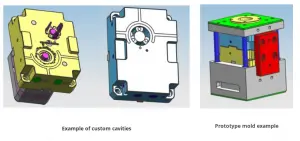
About Prototype Mould Prototype mould is generally used for testing the new design before mass production. In order to save the cost, the prototype mould have to be cheap. And mould life could be short, as low as several hundreds shots. Material – Many injection molder prefer to use aluminium 7075-T6 Mould Life – Maybe…
What is hot runner mold ?
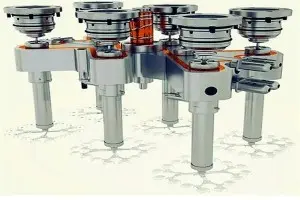
Hot runner mold is a common technology used to make the large size part like the 70 inch TV bezel, or high cosmetic appearance part. And it is also exploited when the raw material is expensive. Hot runner, as the name means, the plastic material is staying molten on the runner system, called manifold, and is…
Introduction Of Injection Molding Machine
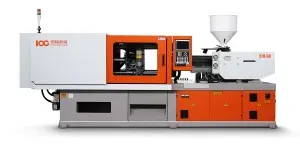
About Injection molding machine Mould or tooling is the key point to produce the high precision plastic molded part. But the mold would not move by itself, and should be mounted on the injection molding machine or called press to form the product. Injection molding machine is rated by tonnage or force, the smallest as…
Things Should Be Known When Design Plastic Parts
You have a very good idea for a new product, but after completing the drawing, your supplier tells you that this part can not be injection molded. Let’s see what we should notice when designing a new plastic part. Wall thickness – Maybe all plastic injection molding engineers would suggest to make the wall thickness as…
3D Printing Technology
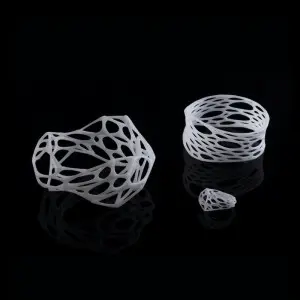
A prototype can be used as an earlier sample, model, or release of a product built to test a concept or process. … A prototype is generally used to evaluate a new design to enhance precision by system analysts and users. Prototyping serves to provide specifications for a real, working system rather than a theoretical one….
Edm Technology
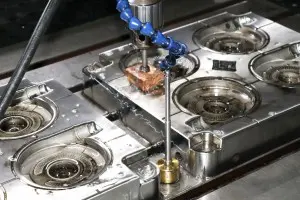
Electrical Discharge Machining (or EDM) is a machining method used to machine any conductive materials including hard metals which are difficult to machine with traditional techniques. … The EDM cutting tool is guided along the desired path very close to the work but it does not touch the piece. Electrical Discharge Machining, which can be divided into three common…